Partnering with communities


Our approach

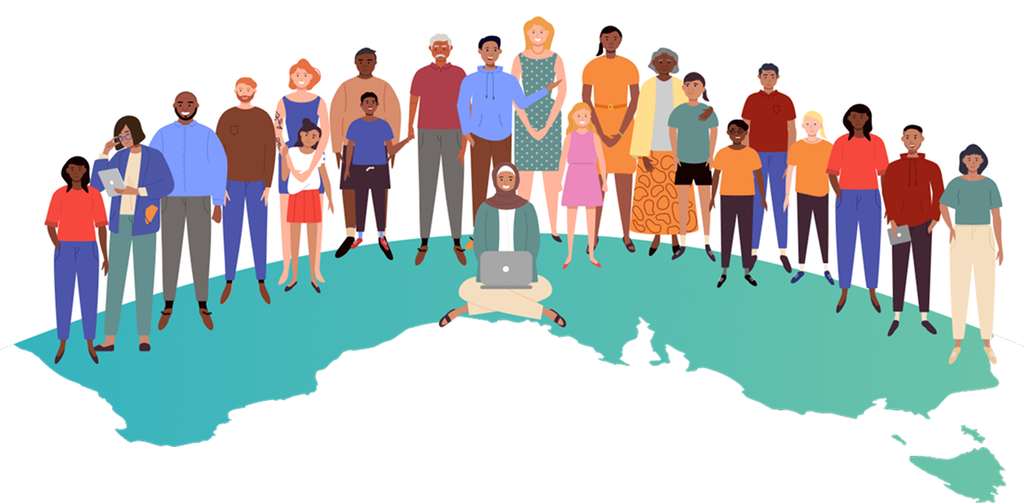
Our community partners are helping us co-design approaches that meet their communities' needs. This means we work with a group of community members to figure out how to best reach, talk with, and invite people from their community to take part in OurDNA.

Working together, we hope to engage thousands of diverse Australians to be part of OurDNA and shape the future of healthcare.

We’re also working closely with representatives from the multicultural sector who are advising us on program-wide decisions. With the Australian Multicultural Health Collaborative, an initiative of the Federation of Ethnic Communities' Councils of Australia, we’ve brought together a group of advisors who are helping us to ensure community interests are central to OurDNA, providing input on things like how we share data.


The difference you’ve made

Partner with OurDNA
Partner with OurDNA

Are you interested in learning about and helping the OurDNA program to advance medical research that might benefit your community members? Please let us know by filling in this form. A member of the team will be in contact with you soon.
Please select your preferred level of participation

Our community partners

Many organisations and individuals are already working with OurDNA. Click the button to view all of our partners and learn more about them.

Our co-design reports

Co-design is central to OurDNA. Our workshop reports are just part of a process of working in partnership with community members to make sure that the program meets their needs.


Upcoming events

Join us at a community event to learn more and be part of the change.

Do you have questions?

If you can’t find the answer you’re looking for, contact us.

OurDNA is a flagship project of the Centre for Population Genomics. The Centre is set up to:

  • Include under-represented communities in genomic research;
  • Explore the function and health relevance of human genes; and
  • Improve the diagnosis and treatment of genetic diseases. 

The Centre is a not-for-profit joint initiative from two of Australia’s leading research institutes: the Garvan Institute of Medical Research in Sydney and the Murdoch Children’s Research Institute in Melbourne.

Na OurDNA e vakailavotaka:

  • O koya sara ga na rua na vanua e cicivaka na Centre for Population Genomics’: Garvan Institute of Medical Research kei Murdoch Children’s Research Institute
  • Ira era cau mai ena sasaga qo
  • E vakarautaka tale ga na Australian Government’s Medical Research Future Fund (MRFF) na veivuke vakailavo se grant 2015969 (CIA Daniel MacArthur; 2022-2027) mai na Genomics Health Futures Mission kei na National Health and Medical Research Council (NHMRC) investigator grant 2009982 (CIA Daniel MacArthur; 2022-2026). Na lewe ni veika e tabaki qo e nona sara ga o koya e vola qai sega ni vakamacalataka tiko ga na rai ni Matanitu o Ositerelia se Commonwealth se na NHMRC.
  • Na porokaramu ni OurDNA e tokona tale ga na sasaga ni Google’s Digital Future Initiative. Mo wilika e levu tale na ka e vauca na tikina qo eke.

Yes, the OurDNA project has been approved by the certified Human Research Ethics Committee (HREC) of the Royal Children’s Hospital. The reference for our ethics approval is: HREC/91986/RCHM-2023

If you have any questions about the OurDNA ethics approval process, or wish to speak to someone independent of the research team, you may contact the Director of Research Operations at The Royal Children’s Hospital. You can phone the Director on (03) 9345 5044 or email them at rch.ethics@rch.org.au

OurDNA is currently funded until the end of 2027. It is our intention to continue our work until all Australian communities are represented and for the OurDNA database and sample bank to be available for as long as possible for researchers. 

To take part in OurDNA, you must:

  • Be over 18 years old
  • Be eligible for Medicare
  • Be able to give a blood sample in Victoria or New South Wales
  • Self-identify as having ancestry from one of the communities underrepresented in genetics resources. Visit this page to check which communities we are actively working with.
  • People cannot participate if they or anyone in their close family has a known severe genetic health condition, like cystic fibrosis or muscular dystrophy. This does not include common conditions like inflammatory bowel disease, cancer or diabetes.

At the moment, Australians from the following ancestry groups are under represented or entirely missing in genetic resources:

  • East African (e.g., Ethiopian, Ghanaian, Kenyan, Mauritian, Somali, South Sudanese, and Sudanese)
  • North African and Middle Eastern (e.g., Assyrian, Chaldean, Egyptian, Iranian, Iraqi, Jordanian, Lebanese, Palestinian, Syrian, and Turkish)
  • Oceanian (e.g., Fijian, Papua New Guinean, Samoan, and Tongan)
  • South-East Asian (e.g., Cambodian, Filipino, Indonesian, Malay, Thai, and Vietnamese)

Australian doctors have also told us that it is hard to find information about these ancestry groups in the resources and databases they use to diagnose genetic and health conditions. 

OurDNA is working to engage with the communities underrepresented in genetic resources. Visit this page to check which communities we are actively working with.

While we are not working directly in Indigenous communities, we are an active member of the ALIGN and CONNECT consortia, national Indigenous-led efforts that are working to empower Aboriginal and Torres Strait Islander people in genomic medicine and research.

We provide technical advice for the development of genomic data infrastructure for nationally consistent, culturally appropriate, ethical storage, management, and sharing of genomic data to benefit Indigenous Australians.