O suesuega faa kenera e manuia ai tagata uma

Ua suia auala o faataitaiga e fai ai vailaau e foma'i. O lau DNA e mafai ona fesoasoani ia i latou ia malamalama atili, su'esu'e, ma vavalo tulaga o le soifua maloloina. O se nofoaga e vave ona tupu ma o le a le pine ae avea ma vaega masani o lau tausiga faalesoifua maloloina.

I le taimi nei, e faitau miliona tagata Ausetalia e ono misia nei tulaga alualu i luma i le soifua maloloina. E mafua ona o le tele o nuu Ausetalia e le o faaalia i punaoa o loo faalagolago iai fomai ma tagata suesue e faamaonia tulaga o le soifua maloloina.


Fausiaina lelei punaoa faanatura

O loo faipaaga le OurDNA ma nuu e aofia ai faalapotopotoga o tua'a o loo toatele o loo misi mai punaoa o suesuega faa kenera ma fomai. Matou te galulue faatasi ma faalapotopotoga tuufaatasi, taitai o nuu ma nuu e fausia punaoa o suesuega faa kenera e fai ma sui o nuu uma.

O nei punaoa o le a fesoasoani i le faaleleia atili o le soifua maloloina mo tagata Ausetalia uma — mo oe, lou aiga ma lou nuu.


O a mea e aofia ai?


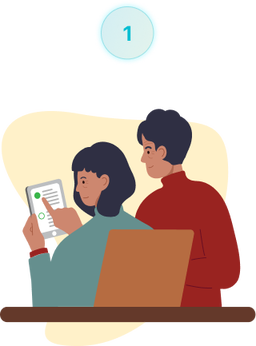
Lesitala i luga o le laina

Faitau faamatalaga o faatagaga ma faatumu le pepa o le faatagaga.

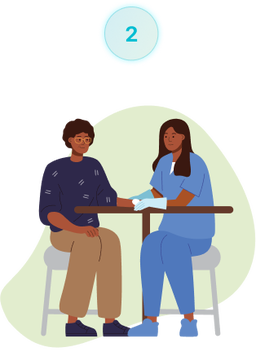
Avatu le toto

Asiasi i se nofoaga autu o le fale su'e toto fai paaga pe auai i se mea na tupu i le OurDNA e tuuina atu ai se faataitaiga o sina toto laitiiti.

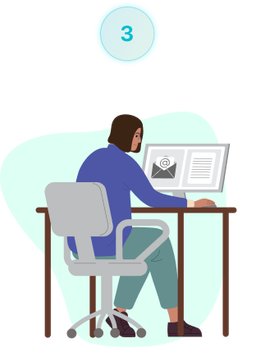
Tumau fesootaiga

E mafai ona e filifili e maua faafouga i suesuega, taunuuga, ma aafiaga o lou sao.


Matamata le vitio i totonu: Filipino | Vietnamese | Arabic | Tongan

Fai paaga mo se lumanai tutusa

O loo fesoasoani mai a matou paaga i le nuu fuafuaga-faatasi e fetaui ma manaoga o latou nuu. O lona uiga matou te galulue faatasi ma se vaega o tagata o le nuu e sue pe faapefea ona sili atu ona aapa atu, talanoa ma valaaulia tagata mai lo latou nuu e auai i le OurDNA.

Galulue faatasi, matou te faamoemoe e faaofia le faitau afe o tagata Ausetalia e avea ma vaega o DNA ma faatulaga le lumanai o le soifua maloloina.

O ai ua auai i le OurDNA?

Tongan

Tongan

Community

OPEN NOW
3% complete
  • 33+ Tongan Australian community members have taken part
  • No upcoming events
  • 10 OurDNA events held to date
Join TONGAN Community
Samoan

Samoan

Community

OPEN NOW
8% complete
  • 82+ Samoan Australian community members have taken part
  • No upcoming events
  • 10 OurDNA events held to date
Join SAMOAN Community
Fijian

Fijian

Community

OPEN NOW
1% complete
  • 5+ Fijian Australian community members have taken part
  • No upcoming events
  • 10 OurDNA events held to date
Join FIJIAN Community
Lebanese

Lebanese

Community

OPEN NOW
24% complete
  • 243+ Lebanese Australian community members have taken part
  • No upcoming events
  • 11 OurDNA events held to date
Join LEBANESE Community
Vietnamese

Vietnamese

Community

OPEN NOW
136% complete
  • 1360+ Vietnamese Australian community members have taken part
  • No upcoming events
  • 10 OurDNA events held to date
Join VIETNAMESE Community
Filipino

Filipino

Community

OPEN NOW
103% complete
  • 1032+ Filipino Australian community members have taken part
  • No upcoming events
  • 24 OurDNA events held to date
Join FILIPINO Community
Upcoming communities:
Sudanese,
South Sudanese

 Sa matou galulue ma fomai ma tagata suesue e saili poo fea nuu e mafai ona sili atu ona penefiti mai sueseuega faakenera. Ae matou te le o faamoemoe e taofi iina! Matou te faamoemoe e fausia punaoa e fai ma sui o tagata Ausetalia uma mulimuli ane.

Faafesootai matou
Upcoming community EOI

Are you part of one of our communities of focus? Are you interested in learning about and helping the OurDNA program to advance medical research that might benefit your community members? Please let us know by filling in this form. A member of the team will be in contact with you soon.


O outou leo

"When I did co-design with OurDNA, it took a long time because they were building up trust so that we as community and as donors see the benefits for ourselves and our families. That's what makes this research unique."

Mila Cichello, Key Partner

Member of the Filipino Community

Expand testimonial

"The good thing with OurDNA is they're here to learn more about the common and the unknown diseases, especially for Filipino communities."

Niel Tequin, Founder of Filipino Ballers Club

Member of the Filipino Community

Expand testimonial

"Personally, I'm from a medical background so I see the benefits of genetic research and how it's under utilised in the Australian Vietnamese population. This is why I was very keen to get involved with OurDNA from the outset."

Bill Tran, Key Partner

Member of the Vietnamese Community

Expand testimonial

"We decided to work with OurDNA because we really believe in what they're doing. It's good for the community, not just for now but for future generations. It’s been an incredibly fun and exciting partnership."

Thao Ha, Key Partner

Member of the Vietnamese Community

Expand testimonial

Tumau fesootaiga ma OurDNA 

Maua tala fou, tala faalaua'itele ma faamatalaga e uiga ia tatou mea na tutupu.

E iai ni au fesili?

Afai e te le mauaina le tali o loo e sailia, faafesootai matou.

OurDNA is a flagship project of the Centre for Population Genomics. The Centre is set up to:

  • Include under-represented communities in genomic research;
  • Explore the function and health relevance of human genes; and
  • Improve the diagnosis and treatment of genetic diseases. 

The Centre is a not-for-profit joint initiative from two of Australia’s leading research institutes: the Garvan Institute of Medical Research in Sydney and the Murdoch Children’s Research Institute in Melbourne.

OurDNA is partnering with communities to include ancestry groups who are mostly missing from medical research. We work with multicultural organisations, community leaders and communities to build genetic resources that represent all communities.

The genetic resources that OurDNA is building will enable all Australians in future generations to benefit from advancements in medical research. Read more about what we’re doing here.

OurDNA is building genetic resources that include multicultural communities to help ensure everyone can benefit from advancements in medical research. This includes:

  • OurDNA Browser: a searchable, public database of summary data on genetic variation
  • OurDNA Data: a secure bank of biological and health information for future medical research
  • OurDNA Samples: a secure bank of blood samples that have been donated for future medical research

For more information on the resources being built, visit this page.

OurDNA is funded by: 

  • The Centre for Population Genomics’ founding institutions: Garvan Institute of Medical Research and Murdoch Children’s Research Institute
  • People who donate funds to our research
  • Funding for this research has also been provided by the Australian Government’s Medical Research Future Fund (MRFF) grant 2015969 (CIA Daniel MacArthur; 2022-2027) from the Genomics Health Futures Mission and by the National Health and Medical Research Council (NHMRC) investigator grant 2009982 (CIA Daniel MacArthur; 2022-2026). The contents of this published material are solely the responsibility of the authors and do not reflect the views of the Commonwealth of Australia or the NHMRC.
  • The OurDNA program also receives support from Google’s Digital Future Initiative. Read more about this collaboration here.

OurDNA is currently funded until the end of 2027. It is our intention to continue our work until all Australian communities are represented and for the OurDNA database and sample bank to be available for as long as possible for researchers. 

At the moment, Australians from the following ancestry groups are under represented or entirely missing in genetic resources:

  • East African (e.g., Ethiopian, Ghanaian, Kenyan, Mauritian, Somali, South Sudanese, and Sudanese)
  • North African and Middle Eastern (e.g., Assyrian, Chaldean, Egyptian, Iranian, Iraqi, Jordanian, Lebanese, Palestinian, Syrian, and Turkish)
  • Oceanian (e.g., Fijian, Papua New Guinean, Samoan, and Tongan)
  • South-East Asian (e.g., Cambodian, Filipino, Indonesian, Malay, Thai, and Vietnamese)

Australian doctors have also told us that it is hard to find information about these ancestry groups in the resources and databases they use to diagnose genetic and health conditions. 

OurDNA is working to engage with the communities underrepresented in genetic resources. Visit this page to check which communities we are actively working with.

DNA (deoxyribonucleic acid) can be found in every part of the body, including blood and saliva. DNA contains a person’s genetic instructions, mostly in sections called genes.

A gene is a section of DNA that contains instructions for a person’s body to develop, grow and work. Differences in genes can help to explain how people look and how their bodies work.

Genetic information contains the instructions that are used by people’s bodies to develop, grow and work. Differences or variants in genetic information can affect health. People share some of their genetic information with their blood relatives, including parents and grandparents, brothers and sisters, and children. 

All of a person's genes or genetic information is called a genome.

Genetic or genomic medicine uses the information in your DNA to diagnose or predict health conditions and guide their treatment or prevention.