Equity through representation: Understanding our communities of focus
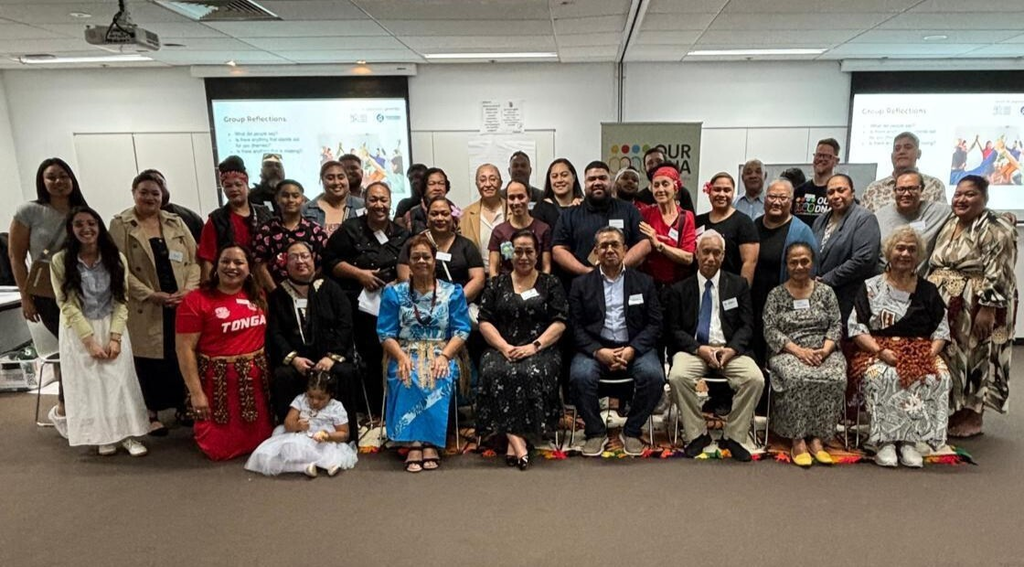
Dr Samantha Croy explains how we chose the communities we're working with now.
Genomics is changing healthcare. Information in your DNA can be studied to understand, diagnose, and even predict health conditions. However, the resources that doctors and researchers rely on to understand this information mostly represent people of European ancestry. This means many multicultural Australians may not be able to experience the benefits of genomics.
We sat down with Dr Samantha Croy, OurDNA Equity Advisor at the Centre for Population Genomics (CPG), to discuss why representation in genomics matters, and how OurDNA is partnering with Australian communities to address this problem.
Why representation matters
Your DNA is like a long instruction book for your body. It’s organised into sections known as genes. Genes contain instructions for your body to develop, grow, and work.
Every person has many changes in their DNA. Genetic changes can explain differences in the way a person looks, but they can also affect your health. You also share many changes with people of the same ancestry. Most of these changes don’t cause health conditions, but some do.
To understand what different DNA changes do, and if they affect health, doctors and researchers compare a patient’s DNA to a healthy ‘reference’ database.
Many existing reference databases only contain data from those of European ancestry. This means that a patient of non-European ancestry is less likely to receive a fast and accurate diagnosis. Without a healthy reference from the patient’s community, it is harder for researchers to tell the difference between a harmless genetic change and one that causes a health condition.
OurDNA is partnering with multicultural communities to invite community members and include ancestry groups who are mostly missing from genetic resources.
“We want future genetic research to look different. We want it to look more like Australia and meet the needs of all Australians,” said Dr Croy.
Our communities of focus
Many multicultural communities are currently underrepresented in medical research. A data-driven process was used to determine which communities OurDNA would focus on first. Because this is a big undertaking, and can't happen everywhere at once, we started with the communities facing the greatest gaps.
Australian census data
Using Census data, experts looked at the population sizes of different Australian communities.
“Starting the program with the larger multicultural communities helps us ensure more Australians benefit from the OurDNA program sooner,” Dr Croy explained.
Data gaps in global databases
The representation of these communities was then analysed in existing ‘reference’ databases.
“Comparing the global representation of genetic data across communities helped us identify existing data gaps that OurDNA could address.”
Existing global research initiatives
Just like the OurDNA program, there are other research initiatives looking to address gaps in genetic data.
“We also had to consider global research initiatives who are working towards the representation of some of our multicultural communities as part of their genetic databases,” Dr Croy said. “This avoids overlaps in our efforts, while still being very useful for those multicultural communities within Australia as well.”
Regional representation
Dr Croy also explained how OurDNA is keen on representing Australian communities from different regions of the world. “We made sure to include communities from East Africa, the Middle East and North Africa, Oceania, and South East Asia. These are regions for which there is little or data accessible in Australia.”
Survey of Australian clinicians
“We listened to clinicians," Dr Croy said. "They told us which Australian communities they were most concerned about in the clinic because the references to their genetic data were very hard to find."
By combining the results of these five approaches, OurDNA identified eight Australian communities to begin with.
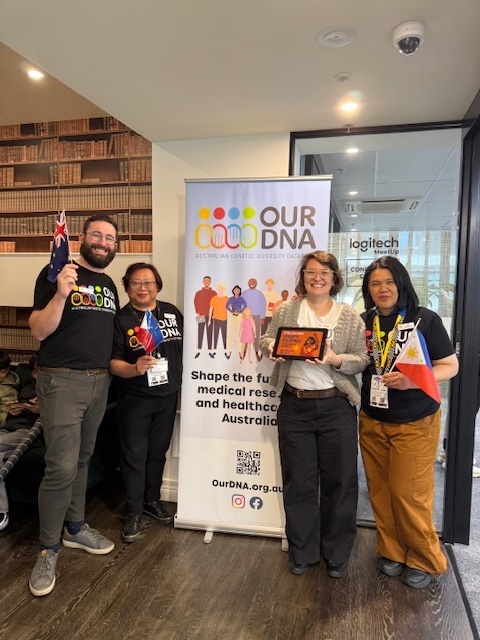
OurDNA has worked with the Filipino and Vietnamese communities and is currently inviting community members with Lebanese, Palestinian, Jordanian, Syrian, Fijian, Samoan, and Tongan ancestry to help build this national resource.
The program plans to expand to include other underrepresented communities in the future.
By taking part, you are helping to create a lasting resource to improve the health of your children and grandchildren.
You can read the full report on how we decided to start with our current communities here.